The Wedding Journey
Sacred Hindu Wedding Traditions
Every ritual of a Hindu wedding carries centuries of meaning — blessings from the divine, promises between two souls and the coming together of two families.
Invoking the remover of obstacles
Ganesh Pooja
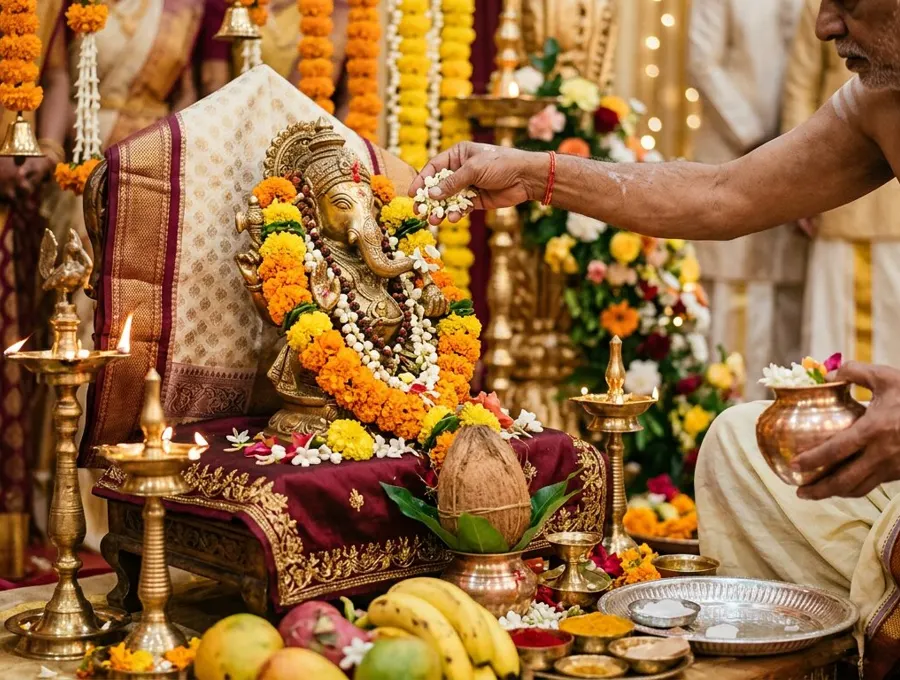
Before any auspicious beginning, families gather to worship Lord Vigneshwara. The priest invokes Ganesha with mantras, flowers, turmeric, kumkum and offerings of fruit and modakam, while the couple and their parents pray for a smooth, harmonious ceremony.
Traditional significance
Ganesha is the lord of beginnings and wisdom. Worshipping him first expresses humility and invites clarity, prosperity and protection for the couple and both families.
Cumin and jaggery — the auspicious moment
Jeelakarra Bellam
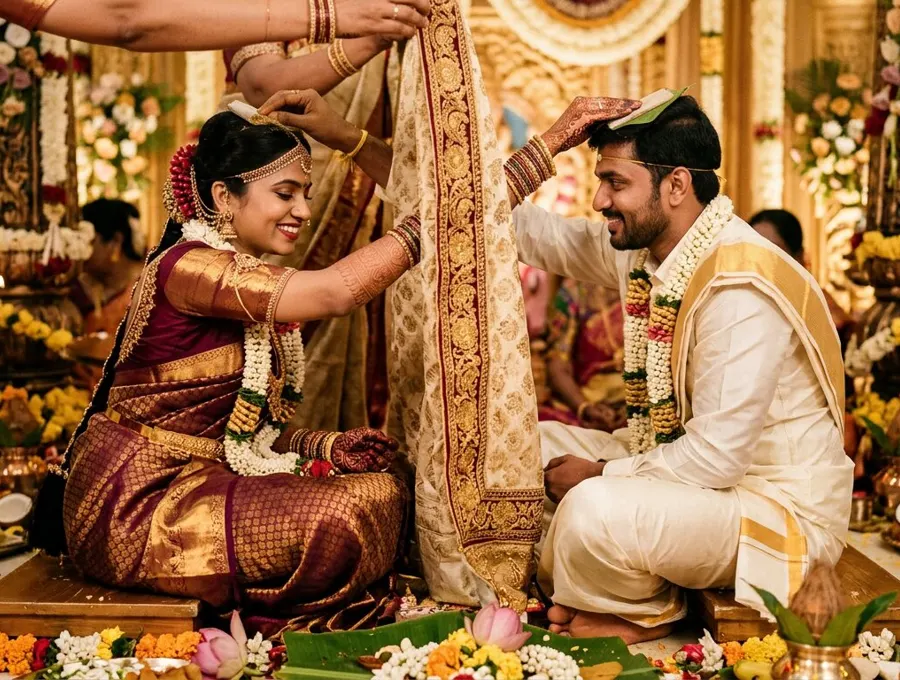
In Telugu weddings, a curtain (tera) separates the bride and groom. At the precise auspicious moment, as the priest chants, each places a paste of jeelakarra (cumin) and bellam (jaggery) on the crown of the other’s head. The curtain is then lowered and they see each other — often for the first time as husband and wife.
Traditional significance
Cumin is bitter and jaggery is sweet; together they represent a promise to stay inseparable through every bitter and sweet moment of life. This moment is considered the true muhurtham of the marriage.
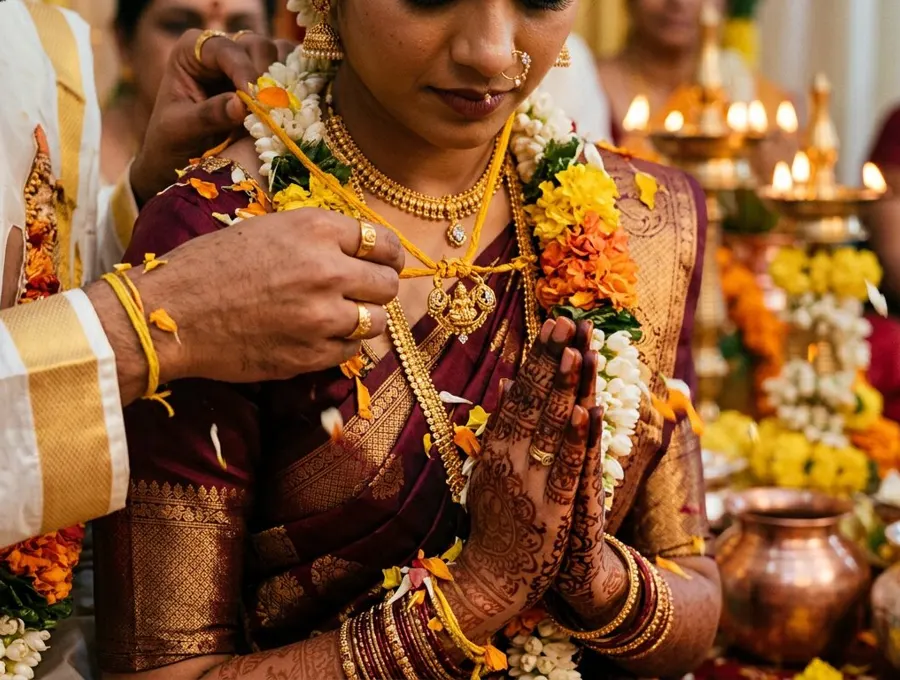
The sacred thread
Mangalya Dharana
The mangalyam — a sacred pendant on a turmeric-coated thread — is blessed by elders and passed among guests for their blessings. Amid the sound of nadaswaram and the chanting of “Mangalyam tantunanena”, the groom ties three knots, often with his sister holding the thread.
Traditional significance
The three knots are said to represent commitment of mind, word and deed — or devotion to the gods, the family and each other. The mangalyam is a lifelong symbol of the marital bond.
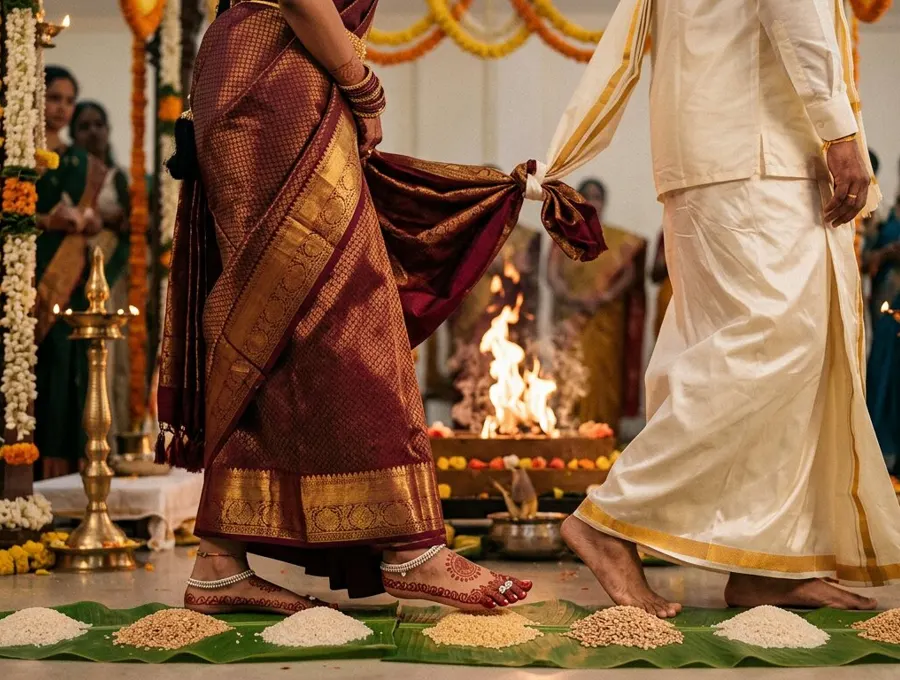
Seven sacred steps
Saptadi
Saptapadi is the heart of the Vedic marriage. The couple take seven steps together, each accompanied by a vow: for nourishment, strength, prosperity, happiness, children, harmony through the seasons and lifelong friendship.
Traditional significance
Vedic tradition holds that after the seventh step the couple become friends for life — “sakha saptapadi bhava”. The marriage is considered complete with this ritual.
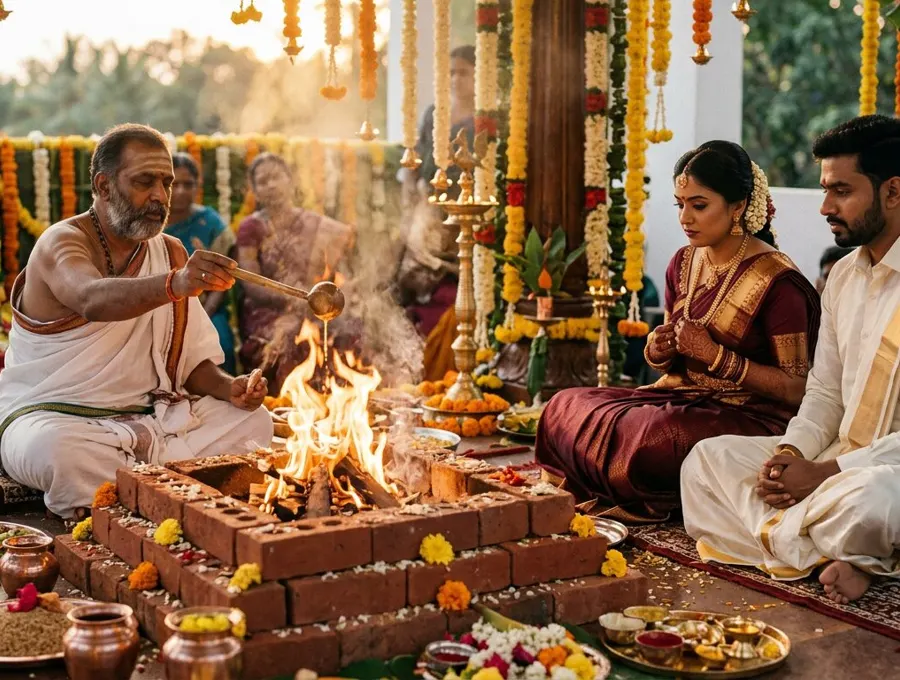
The sacred fire ritual
Homam
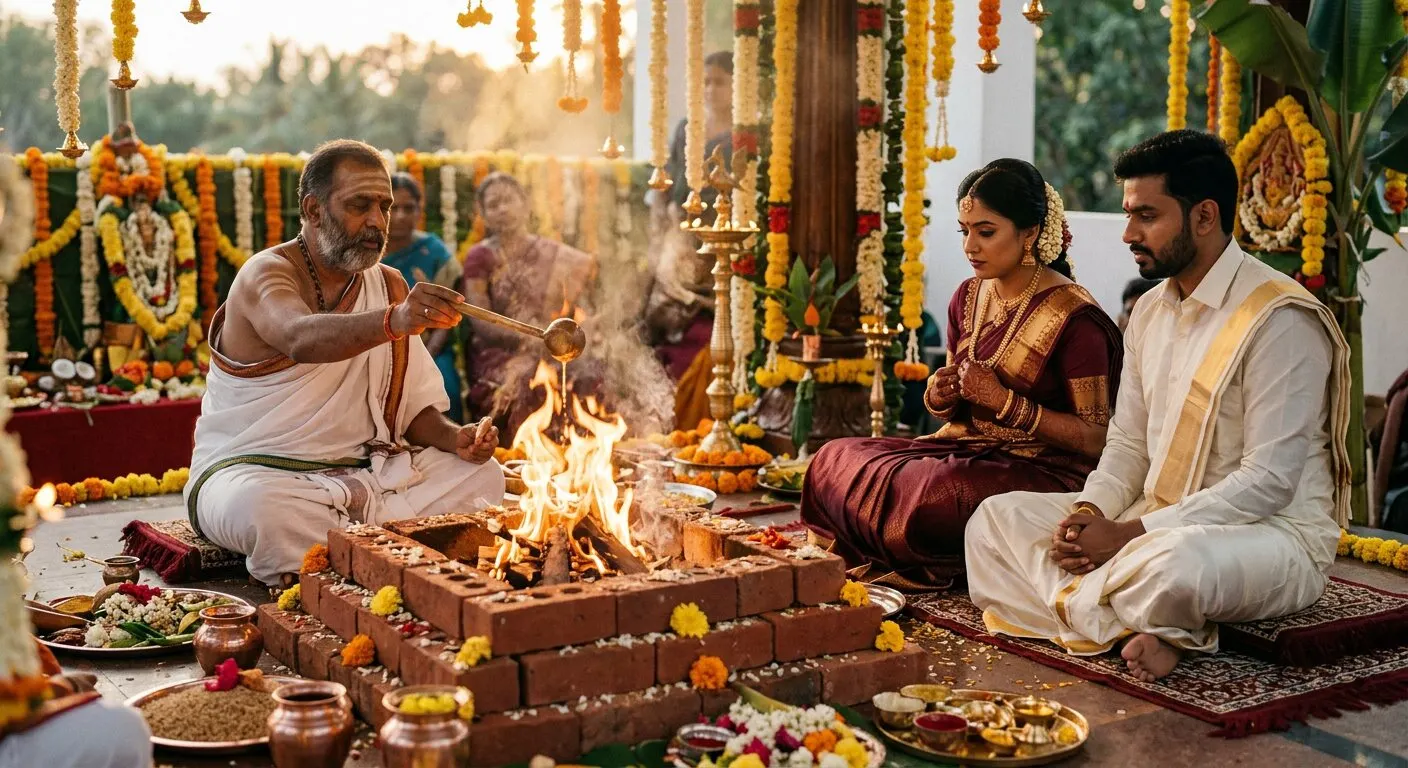
A homam is lit in a consecrated fire altar. The couple offer ghee, rice and samidha (sacred twigs) into the flames while the priest recites Vedic mantras, inviting the deities to bless the union. The couple also walk around the fire during the ceremony.
Traditional significance
Agni purifies and carries offerings to the divine. Making vows before the fire signifies that the promises are sacred, witnessed and unbreakable.
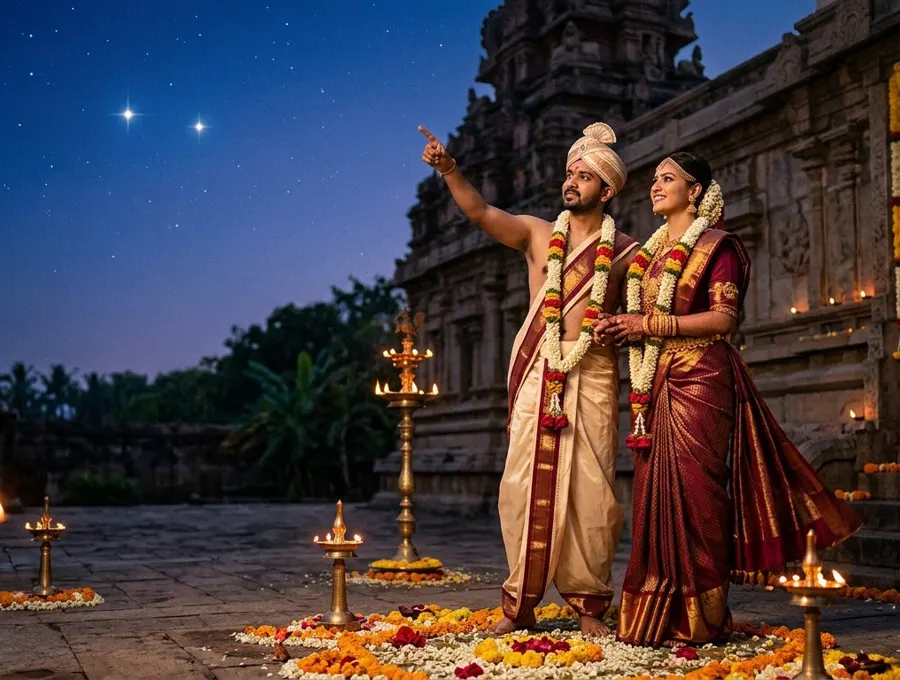
Gazing upon the ideal couple star
Arundhati Darshanam
After the main rituals, the couple step out to view the star pair known as Vashishta and Arundhati (Mizar and Alcor in the Big Dipper). The groom points them out to the bride as the priest narrates the devotion of the sage Vashishta and his wife Arundhati.
Traditional significance
Arundhati and Vashishta revolve around each other forever, symbolising loyalty, mutual respect and steadfast companionship — the ideal the new couple aspire to.
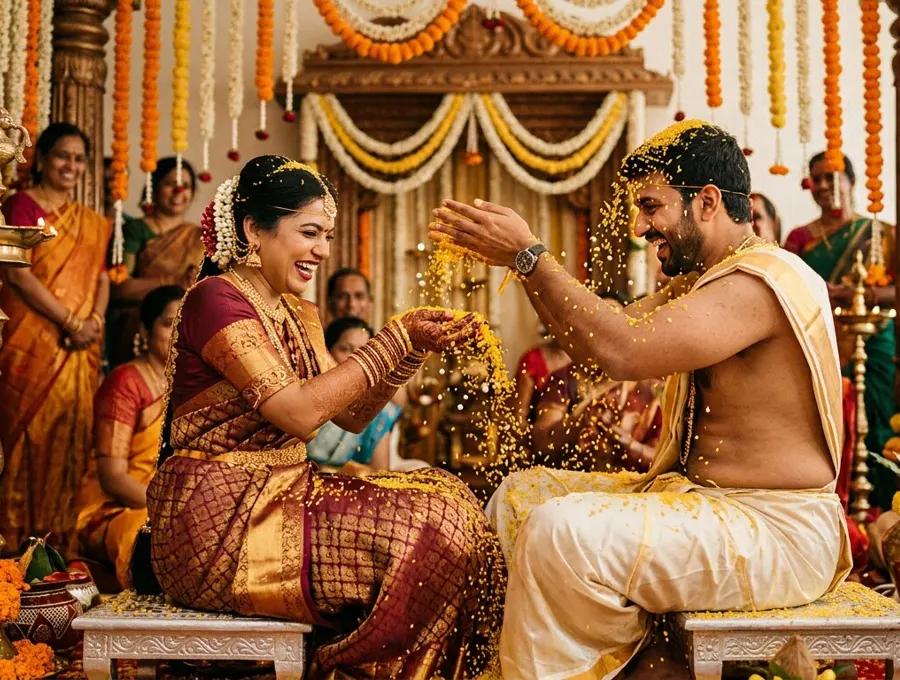
Showers of joy and prosperity
Thalambralu
Thalambralu is one of the most joyous moments of a Telugu wedding. The bride and groom take handfuls of akshintalu — rice mixed with turmeric, sometimes with pearls — and pour it over each other’s heads, with family cheering them on in a playful contest.
Traditional significance
Rice signifies abundance and turmeric signifies purity and auspiciousness. The ritual expresses wishes for a prosperous, happy home and the playful affection that keeps a marriage young.
Begin your own sacred journey
Meet families who share your traditions and values.